- Mar 17
Malocclusion in Children: What Your Child’s Bite Can Tell You
- Melanie Van Schelven
The size, shape, and function of the mouth and face all play a crucial role in overall health. There's hardly a component of the body not affected. You might not realise that you can see warning signs of these development problems very early on in life (sometimes from birth). A child’s bite can reflect how they breathe, how their tongue rests, how they chew, and even how their face is developing.
First, the technical words...
Occlusion: how teeth and jaws fit together.
Malocclusion: the misalignment or incorrect positioning of the teeth and jaws.
There are several different categories of malocclusion or crowded teeth ⬇️
Underbite
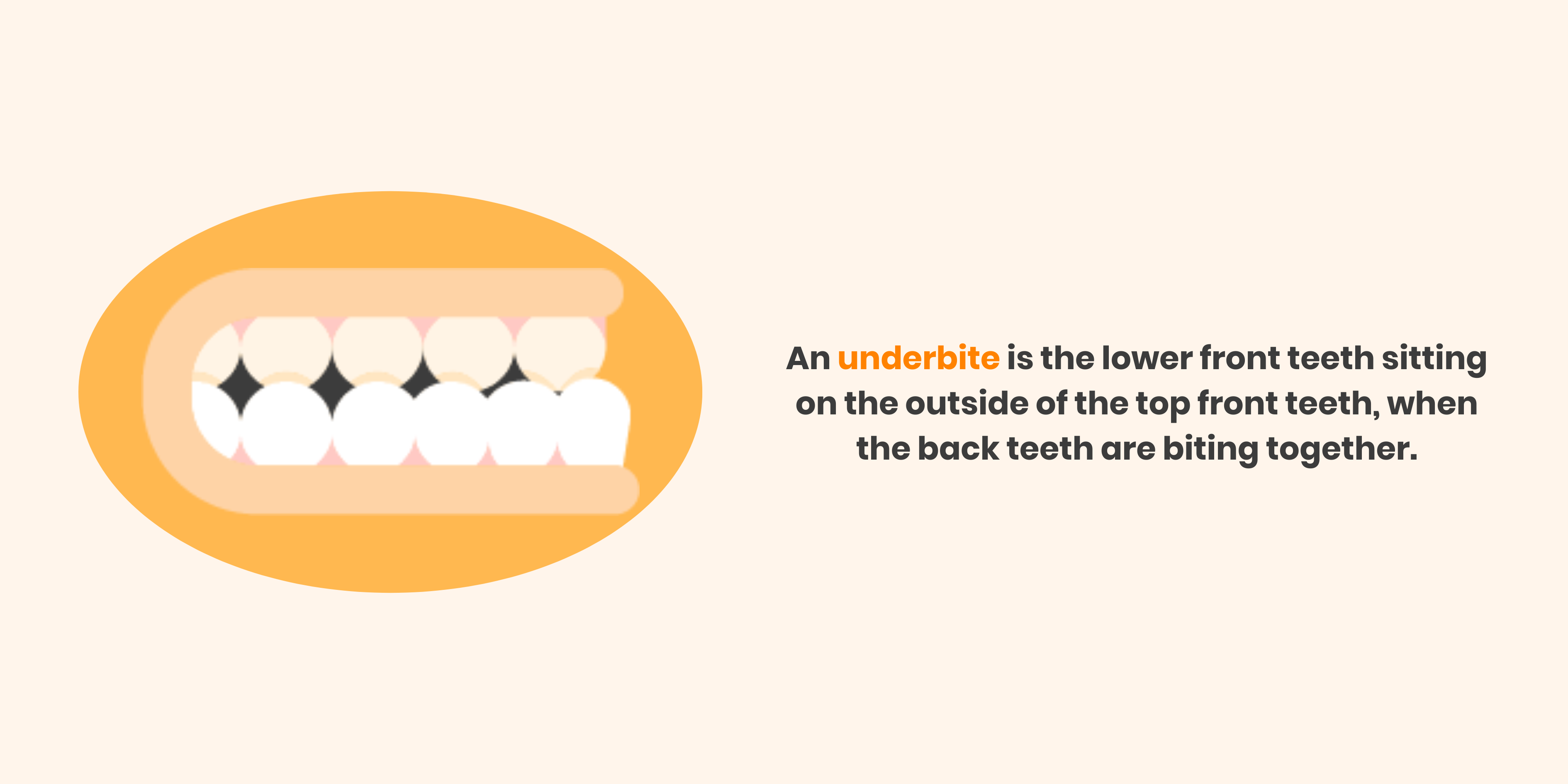
An underbite is when the lower front teeth sit in front of the upper front teeth when the back teeth are together.
Ideally, the upper teeth should sit slightly in front of the lower teeth with a small gap of about 1 to 3 millimetres. When the opposite happens, it can suggest the upper jaw has not grown wide enough. And that matters because the upper jaw also forms the floor of the nasal airway.
An underbite corresponds with the lower molars positioned further forward than the top molars and in adult teeth is referred to as Class III malocclusion.
Underbites are often linked with things like:
Mouth breathing
Sleep disorders
Tongue, lip and cheek ties
Narrow palate structure
Low resting tongue posture
Genetic heritage
Overbite
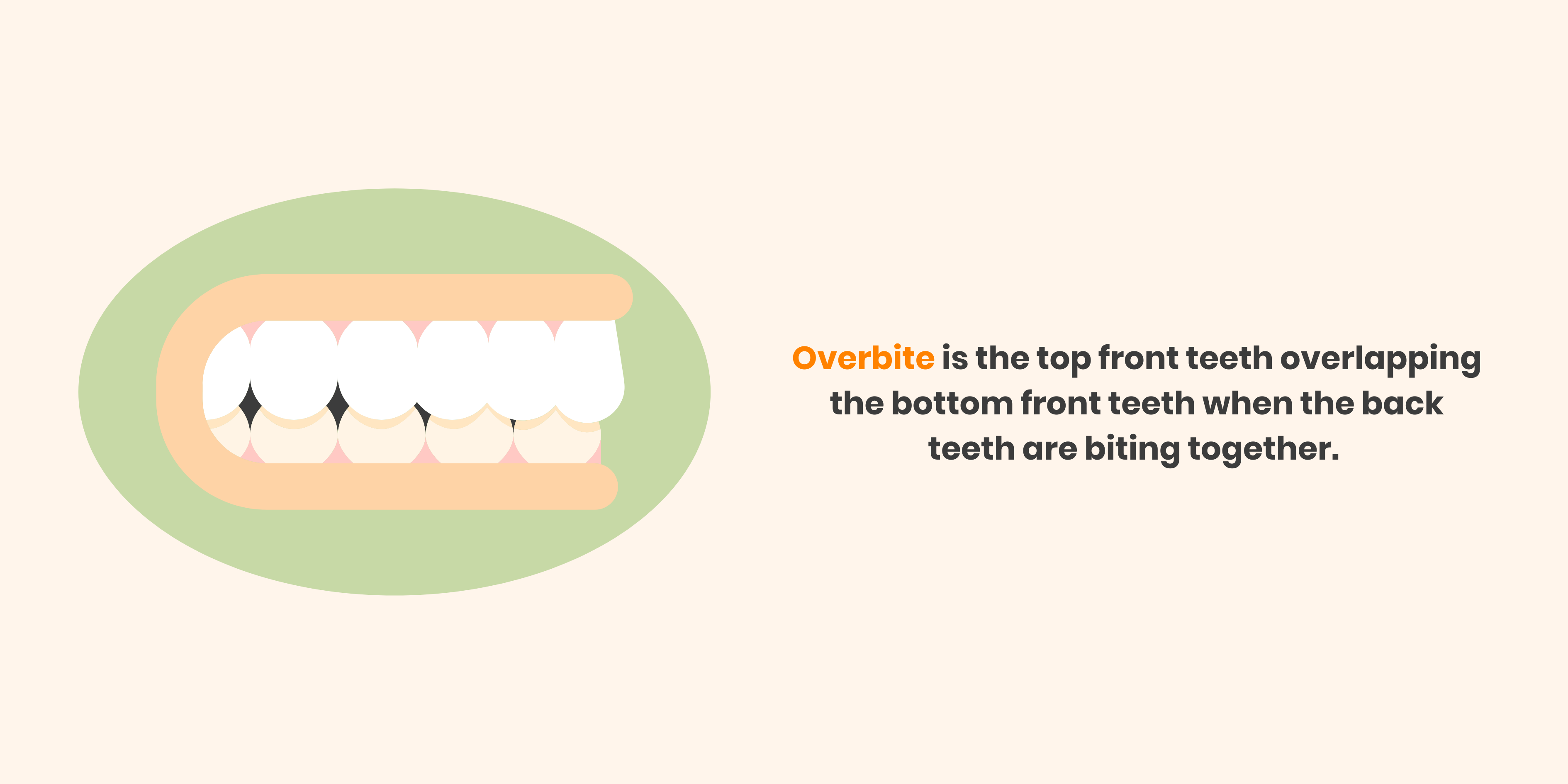
An overbite of up to 3mm is actually a good thing. It's ideal to have a small overlap of the top and bottom front teeth. 'Increased' or 'deep' overbites are when we run into problems. In some cases, the top front teeth can even completely cover the bottom front teeth. Sometimes the bottom front teeth will bite into the palate and cause trauma to the gums.
An overlap of more than 3mm is an 'increased' or 'deep' overbite and indicates a small lower jaw. This appearance of the front teeth typically corresponds with the lower molars positioned further back than the top molars and in adult teeth is referred to as Class II, Division 2 malocclusion.
Increased overbites are associated with:
'Gummy' smiles
Mouth breathing
Obstructive sleep apnea
Tongue, lip and cheek ties
Crowded teeth
Limited chewing
Overjet
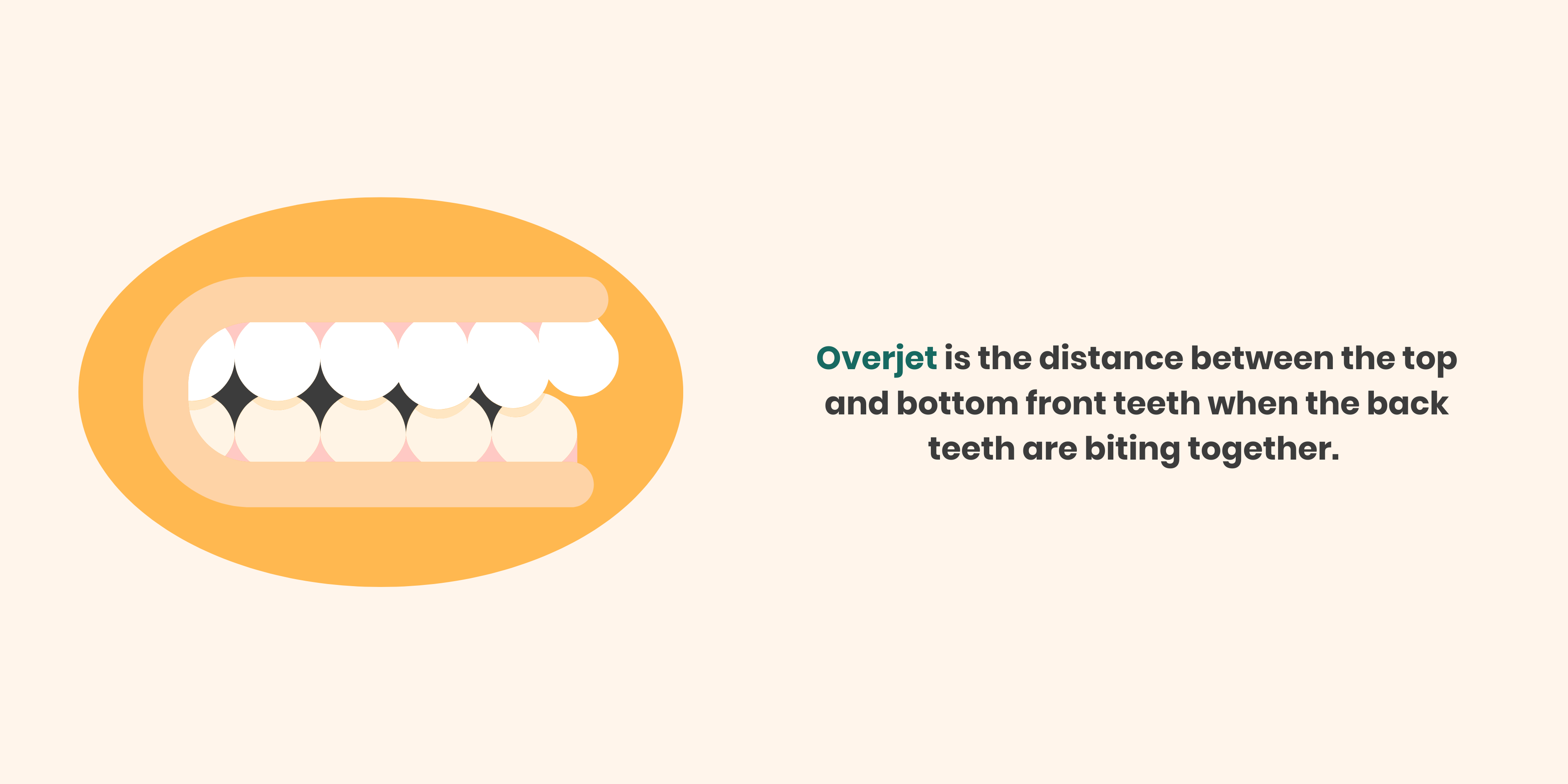
An overjet is something most people have. It's an increased overjet that becomes a problem.
Overjet is the horizontal distance between the top and bottom front teeth when the back teeth are biting together. A distance of 1-2mm is acceptable. More than 2mm between the top and bottom front teeth is an 'increased overjet' and can indicate a small lower jaw.
This appearance of the front teeth typically corresponds with the lower molars positioned further back than the top molars and in adult teeth is referred to as Class II, Division 1 malocclusion.
Increased overjets are commonly seen alongside:
Thumb and finger sucking
Tongue thrust
Mouth breathing
Obstructive sleep apnea
Difficult lip closure
Lower lip trap
Tongue, lip and cheek ties
An icreased overjet is also a risk for dental trauma to the prominent front teeth.
Open Bite
Open bites come in two categories - anterior and posterior. Anterior open bites are known to self-correct when the cause is removed (e.g. no more dummy). Posterior open bites can be more complex depending on the cause.
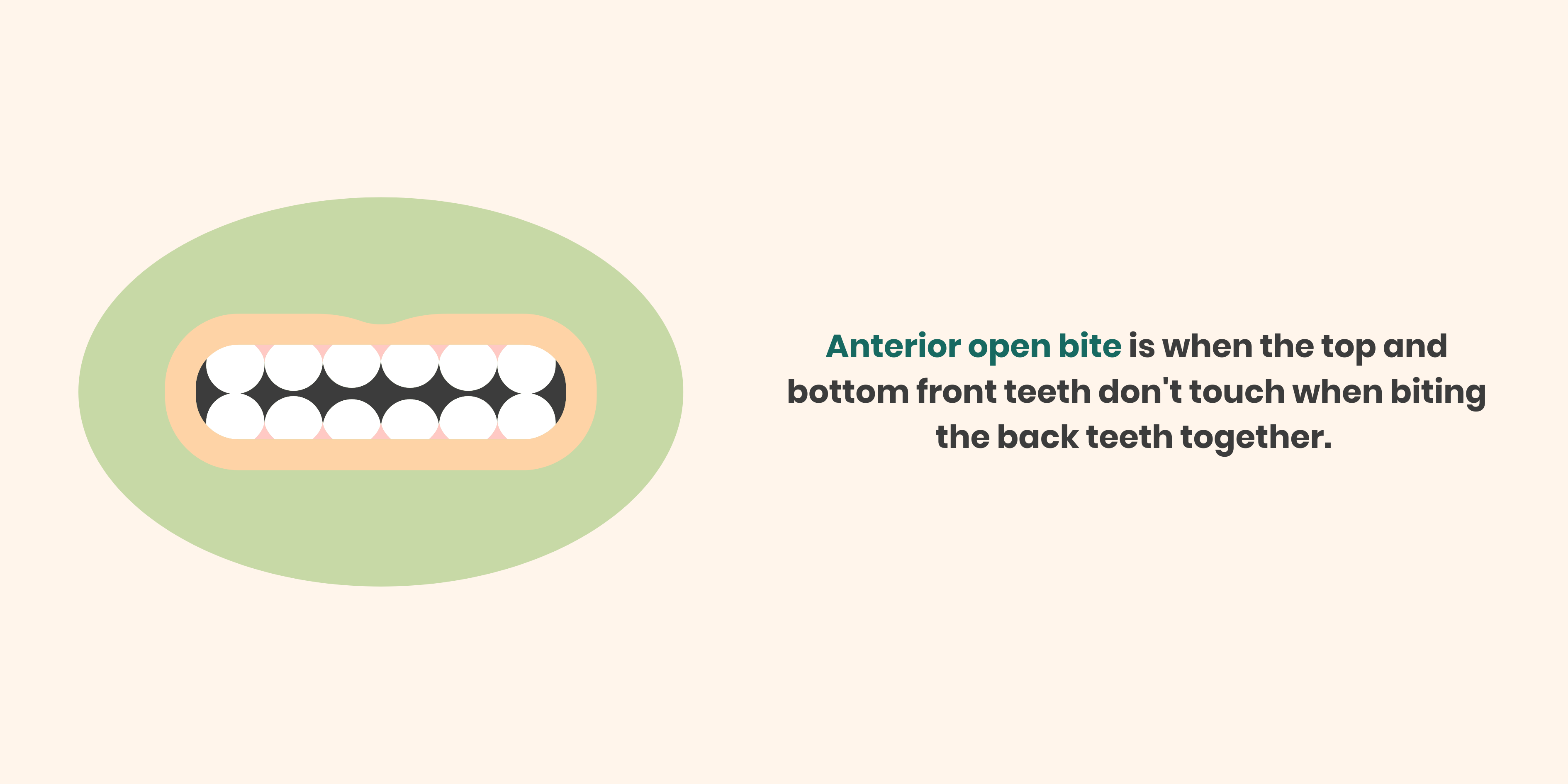
Anterior open bites can be caused by:
Long-term dummy use
Thumb and finger sucking
Mouth breathing
Forward resting tongue posture
Long-term use of dental sleep appliances
Incompetent lip closure
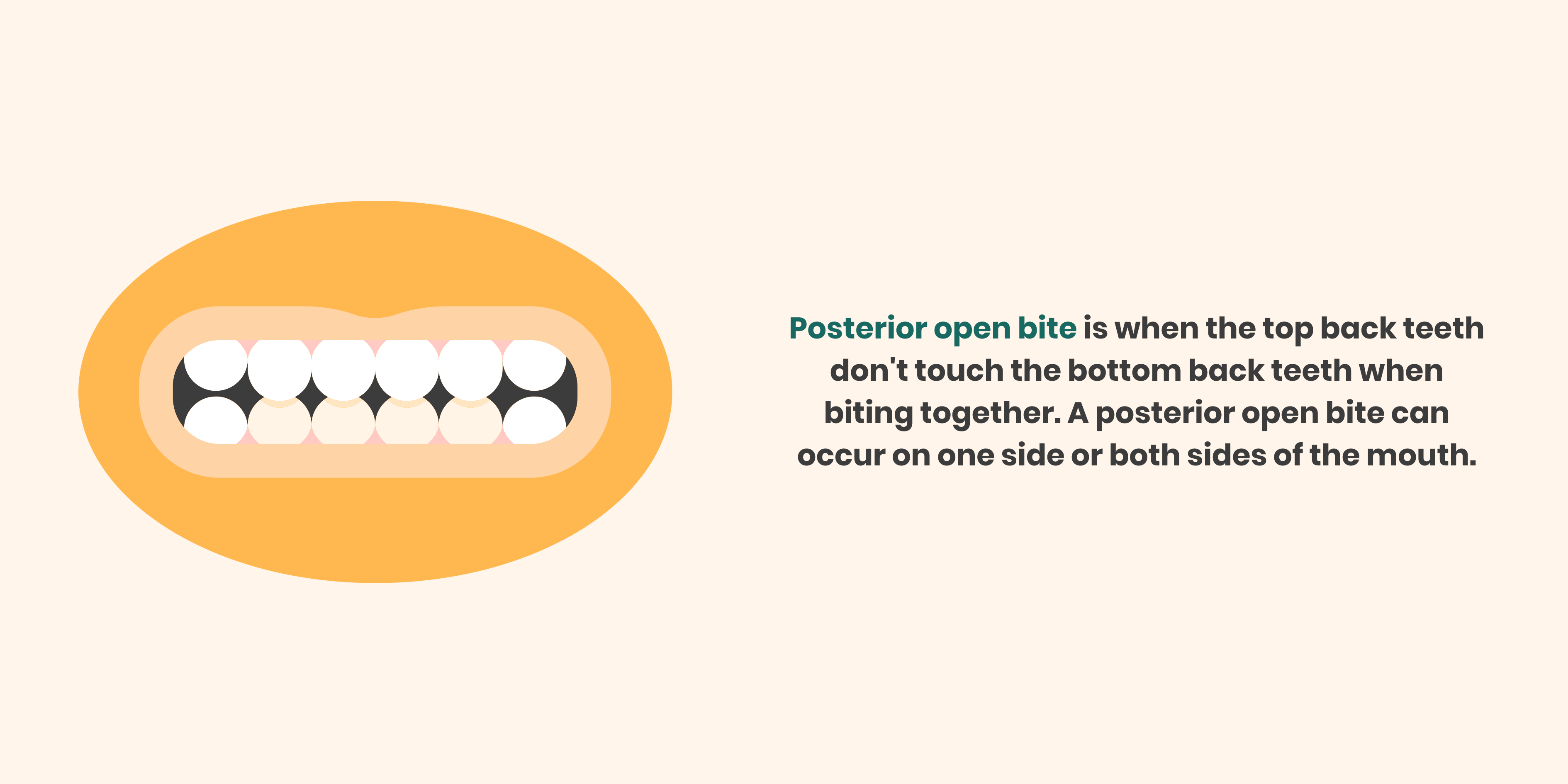
Posterior open bites are related to:
TMJ disorders & jaw pain
Changes to muscle composition
Problems with tooth eruption
Side resting tongue posture
Genetic syndromes
Difficulty with chewing
Asymmetrical facial appearance
Crossbite
Similar to open bites, crossbites can involve the front teeth or the back teeth. Crossbites can also occur on one side of the mouth or both. Like all malocclusion, crossbites tell us there's a problem with function and/or growth and they shouldn't be ignored.
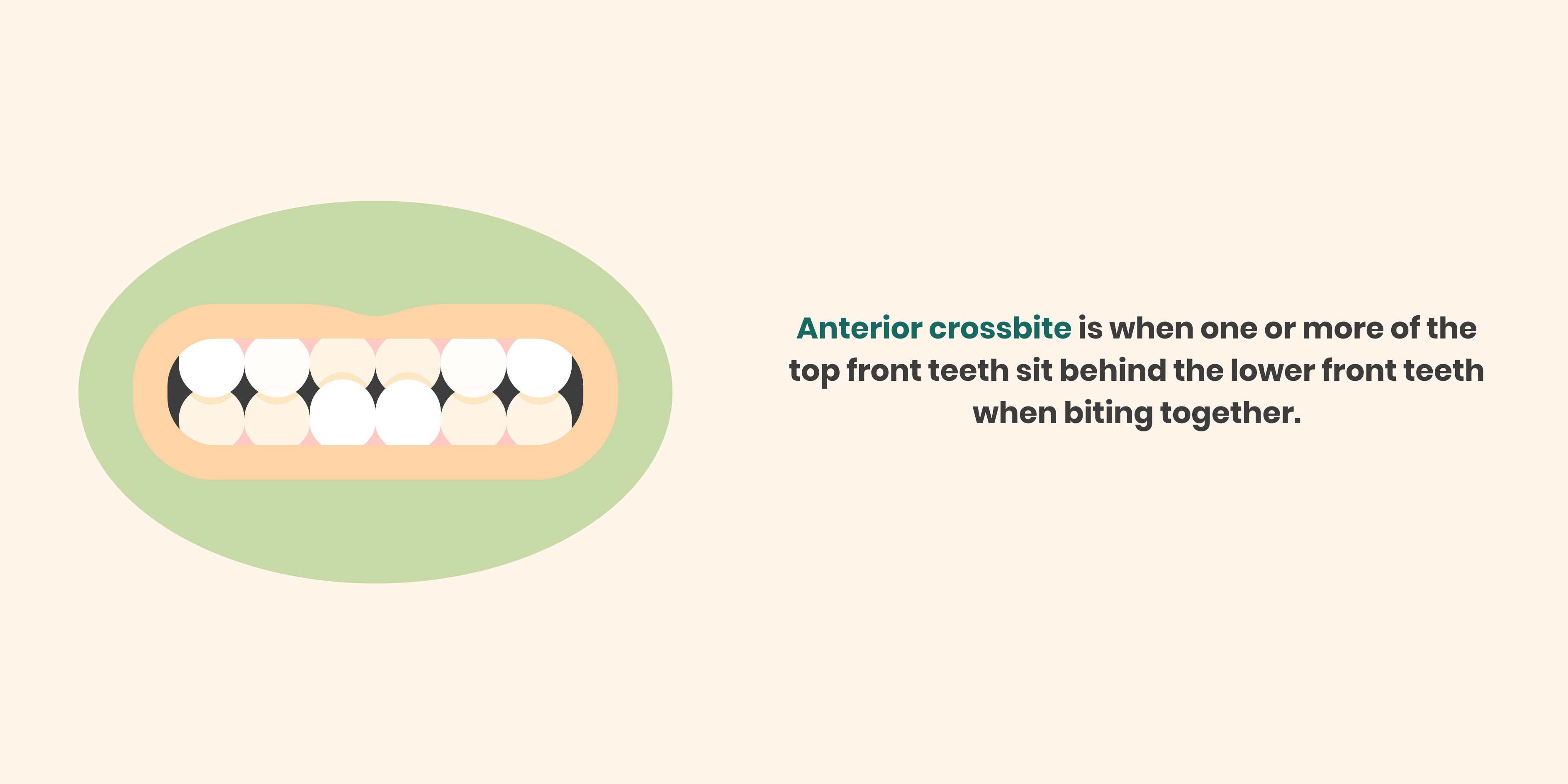
Anterior crossbites are associated with:
Narrow palate
Oral habits
Low resting tongue posture
Mouth breathing
Sleep disorders
Long-term use of CPAP for Sleep Apnea
Forward growth of the jaw
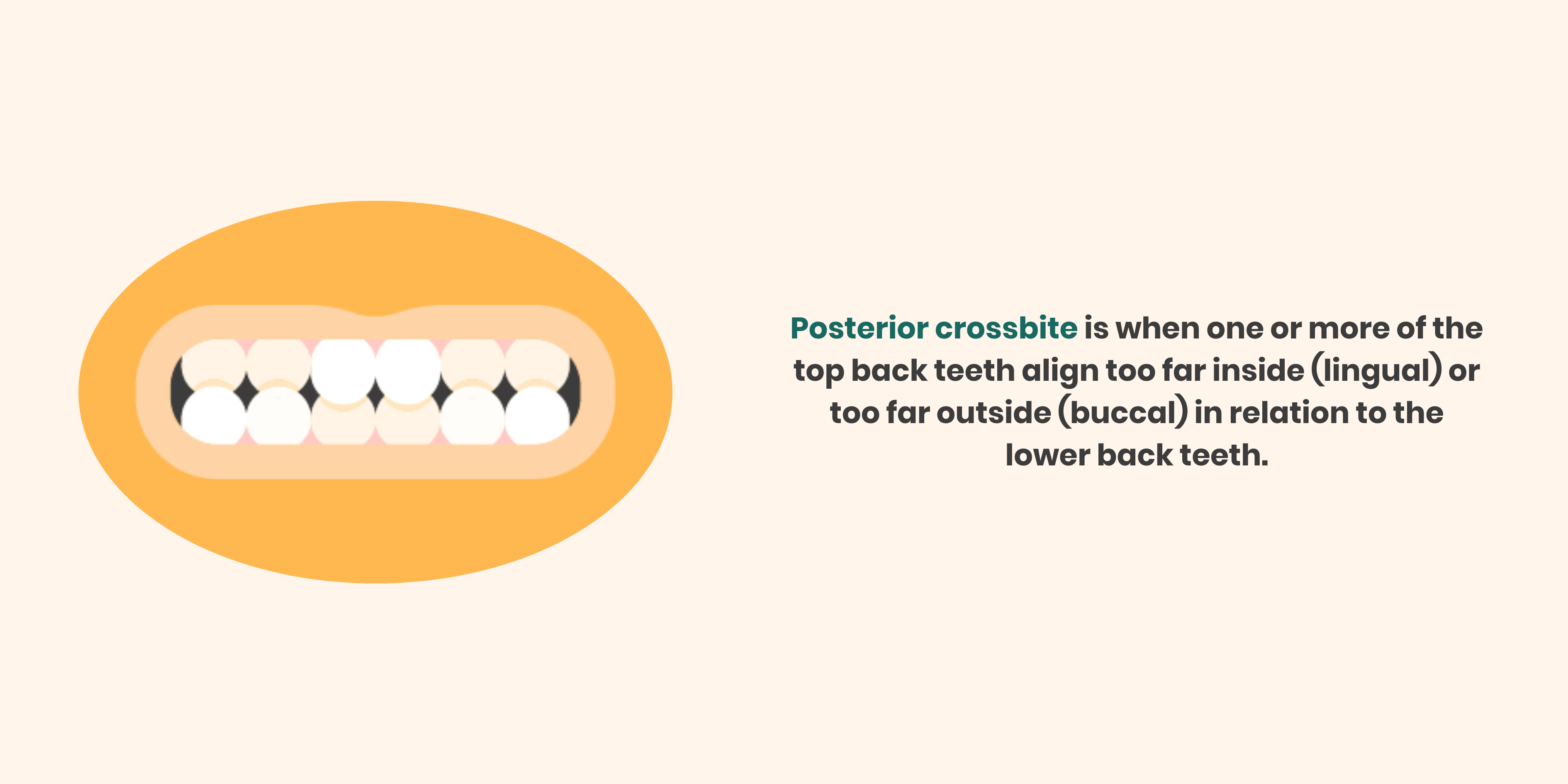
Posterior crossbites are associated with:
Narrow palate
Side resting tongue posture
Difficulty with chewing
Asymmetrical facial appearance
Sleep disorders
Tooth loss
Jaw shifting habits
Asthma
Small lower jaw
Why Bite Relationships Matter
Malocclusion matters because it's a sign of oral muscle dysfunction and incorrect growth. They have the potential to impact breathing, sleep, eating ability, speech, oral hygiene, pain, facial appearance, and oral habits.
While changes do happen with growth, it's never too early to assess malocclusion. If you notice any signs of misalignment in your child's teeth or jaws, don't wait. Early intervention can make a significant difference in your child's overall health and development. You might consider an assessment if you notice things like:
Mouth breathing during sleep
Snoring or restless sleep
Persistent dummy or thumb habits
Difficulty chewing certain foods
Teeth that appear crowded or misaligned
Lips that struggle to stay closed at rest
When we assess bite development, we're not just looking at teeth.
If you are noticing signs of malocclusion, mouth breathing, chewing difficulties, or sleep concerns, it can be helpful to look at the full picture of oral function and development.
An Oral Function Consultation looks at breathing, tongue posture, chewing patterns, sleep, and dental development together so we can understand what might be influencing your child’s bite.
From there, we can talk through the next steps for your child.
About The Face Place
The Face Place supports families with early intervention care for children’s oral function and dental health. Led by Oral Health Therapist Melanie Van Schelven, our approach blends clinical insight with family-centered education, helping parents understand why something’s happening and what to do next.
Visit thefaceplaceofm.com.au for more free guides and evidence-based support.